Another Grievance Grift? Alberta's Latest Covid Lawsuit Looks More Like Political Theatre Than Justice

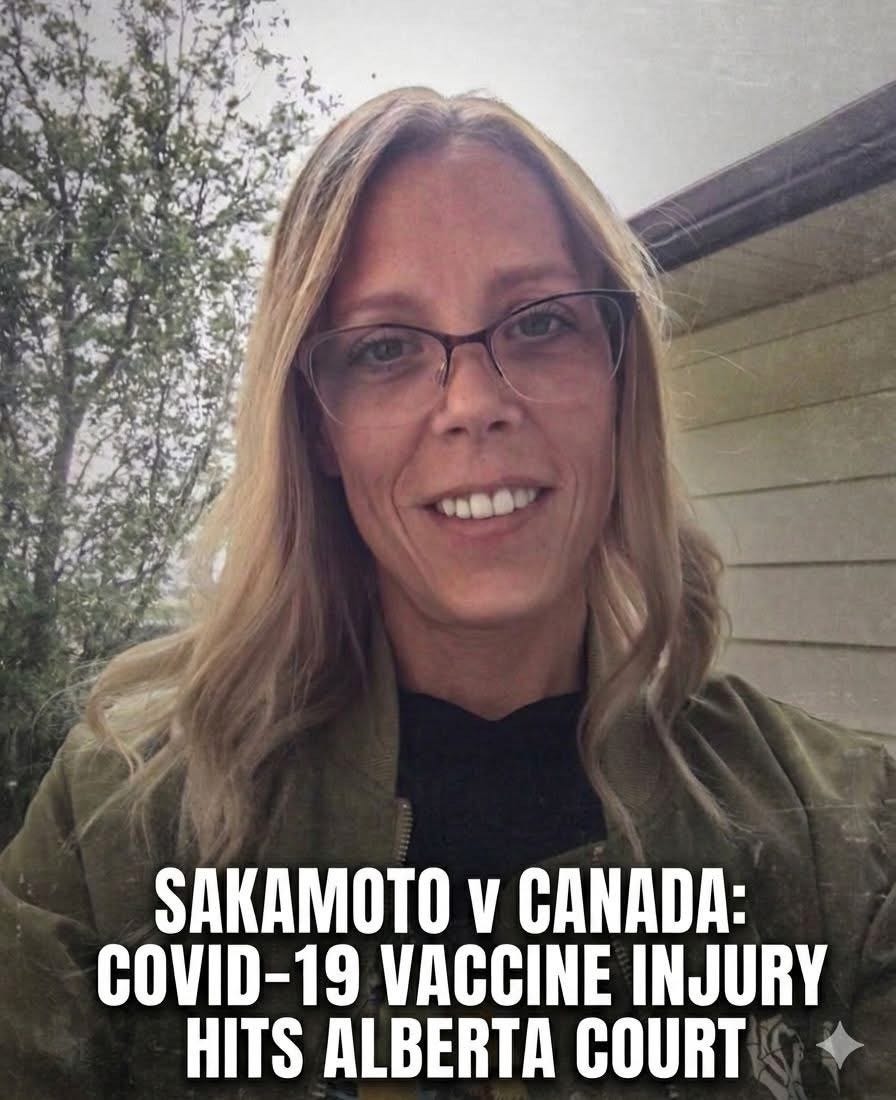
The proposed class action lawsuit known as Sakamoto v. Attorney General of Canada and the Government of Alberta has reached the certification stage before Alberta’s Court of King’s Bench, and its supporters are celebrating it as a historic battle for justice.
But stripped of the rhetoric and social media fanfare, this case increasingly resembles something else entirely: another grievance-fuelled campaign built on anger, distrust and political symbolism rather than a likely legal victory.
The certification hearing is not a ruling on the merits of the allegations. The court is not determining whether governments committed negligence, conspiracy, assault or misrepresentation.
It is deciding whether the lawsuit satisfies procedural requirements to move forward as a class action. Certification is an important milestone, but it is not validation of the claims themselves. No matter how much you try to spin it.
Yet on social media, the case is already being framed by supporters as proof of government wrongdoing. That leap is both legally and factually unwarranted.
The involvement of lawyer Jeff Rath has also drawn significant attention. Rath has become a polarizing figure in Alberta politics, not simply because of his legal work but because of his outspoken political activism and controversial associations with separatist and anti-establishment movements. A quick search with the Alberta Law Society states a lot.
Critics argue that he has increasingly positioned himself as a champion of grievances against governments and institutions, transforming public anger into political and legal campaigns that generate headlines, fundraising opportunities and public attention. Whether one agrees with his politics or not, his name has become synonymous with highly charged causes that thrive on distrust of government authority.
The lawsuit’s promotion by Tamara Lich raises further questions. Lich emerged as one of the most recognizable figures of the 2022 convoy protests and was later convicted on charges related to her role in organizing and participating in the unlawful demonstration that paralyzed downtown Ottawa for weeks. Her political brand has been built around opposition to pandemic restrictions and deep skepticism toward government institutions.
Tamara was once again acting as a pretend journalist for Rebel news stating that they are the only news outlet providing updates on the case. Um, yeah. That says everything right there.
That does not invalidate the experiences of individuals who believe they were injured by vaccines. Vaccine injuries, while extremely rare, are real, and people who suffer genuine adverse reactions deserve compassion, support and fair treatment. Governments have acknowledged this reality through the establishment of support programs.
But this lawsuit appears to be attempting something far broader. The allegations include claims of conspiracy to commit assault and battery and assertions that informed consent was effectively destroyed through coercion.
These are extraordinary allegations requiring extraordinary evidence. To date, no court has found that Canadian governments engaged in such conduct.
The language surrounding the lawsuit often seems designed less to illuminate facts and more to reinforce a worldview in which governments are inherently malicious and every pandemic policy becomes evidence of a grand betrayal. It feeds an ecosystem of perpetual outrage where every setback, every delay and every policy disagreement becomes another grievance to monetize, amplify and recycle.
That is why critics increasingly see this case not as a landmark quest for accountability but as yet another grievance grift.
The plaintiffs may ultimately have the opportunity to present their evidence if certification is granted. They are entitled to their day in court, and every claimant deserves due process. But the public should be wary of attempts to portray a procedural hearing as a vindication of sweeping allegations that remain unproven.
Albertans have seen this playbook before: apocalyptic rhetoric, promises of earth-shattering revelations and declarations that justice is just around the corner. More often than not, what follows is years of litigation, mounting legal bills and supporters left wondering whether they were participants in a genuine pursuit of justice or simply another chapter in an ever-expanding industry of political grievance.
A courtroom is a place for evidence, not slogans. And until evidence is tested and findings are made, this case remains precisely what it is: a proposed class action lawsuit at a procedural stage, not proof of conspiracy, and certainly not the reckoning its grievance promoters claim it to be.
A true, legitimate class action lawsuit against the Provincial Government would be the millions of Albertan’s whose private data was stolen and for which there will be long term risk and harm has already be caused to domestic violence victims in this province requiring them to relocate, etc.
Evidence requires facts that these whiners don't have, and can't find because the "societal harms@ they claim are a fabrication supported by very few if any cases; However, once again we waste public resources on private delusions!